
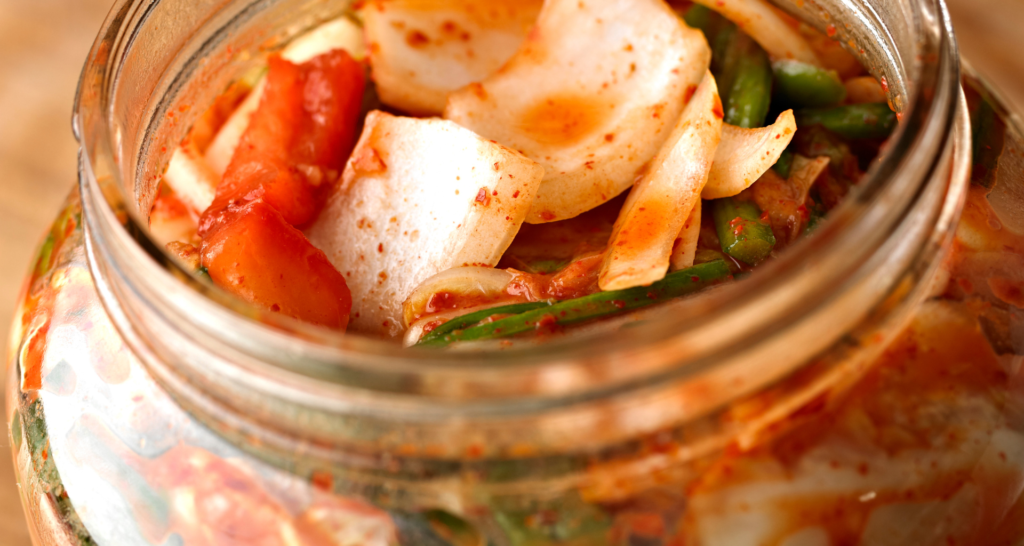
Frequently Asked Questions About Kimchi
Kimchi ferments at room temperature for 1 to 5 days depending on the ambient temperature and your flavor preference. At 70°F it typically takes 2 to 3 days to develop a pleasant tang. Taste it daily — once it reaches your desired sourness, move it to the refrigerator to slow fermentation.
Yes — kimchi is one of the most probiotic-rich foods available. It contains billions of live Lactobacillus bacteria per serving that support gut microbiome diversity, improve digestion, and strengthen immune function. Regular consumption of fermented foods like kimchi is associated with improved gut health outcomes.
Yes — replace fish sauce with soy sauce, tamari, or a vegan fish sauce alternative made from seaweed and mushrooms. Vegan kimchi ferments well and develops similar complex flavors. The fish sauce adds umami depth, so use a generous amount of its substitute and add a small piece of kombu during fermentation.
Homemade kimchi lasts up to 3 months in the refrigerator in a sealed glass jar. It continues to ferment slowly in the fridge, becoming more sour and pungent over time. Older kimchi is excellent for cooking — use it in kimchi fried rice, pancakes, or stews where the strong sour flavor enhances the dish.
Yes — kimchi is keto-friendly. A half-cup serving contains approximately 4 grams of net carbs, primarily from the cabbage and any added sugar in the recipe. Make it without sugar or use a small amount of a keto-friendly sweetener to keep it fully compatible with a ketogenic diet.
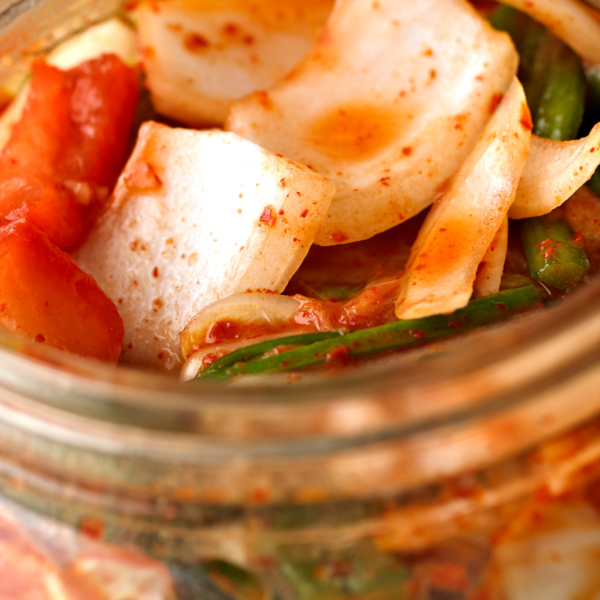
Kimchi Recipe
Equipment
- Large mixing bowl
- Knife
- Cutting board
- Glass jar or fermentation container
Ingredients
- 1 large napa cabbage
- 1/4 cup sea salt
- 1 tablespoon sugar
- 2 tablespoons fish sauce
- 2 tablespoons Korean red chili pepper flakes gochugaru
- 4 cloves garlic minced
- 1 inch ginger minced
- 4 green onions chopped
- 1 medium carrot julienned
- 1 medium radish julienned
Instructions
- Prepare the Cabbage: Cut the napa cabbage into quarters and remove the core. Cut each quarter into bite-sized pieces. Place the cabbage pieces in a large mixing bowl.
- Salt the Cabbage: Sprinkle the sea salt over the cabbage and toss to coat evenly. Let it sit for 2 hours, tossing occasionally. The salt will draw out moisture from the cabbage.
- Rinse and Drain: Rinse the cabbage thoroughly under cold water to remove excess salt. Drain well and set aside.
- Make the Kimchi Paste: In a separate bowl, combine the sugar, fish sauce, Korean red chili pepper flakes, minced garlic, and minced ginger. Mix well to form a paste.
- Combine Vegetables and Paste: Add the chopped green onions, julienned carrot, and julienned radish to the bowl with the drained cabbage. Add the kimchi paste and mix everything together, ensuring the vegetables are evenly coated.
- Pack the Kimchi: Pack the kimchi mixture tightly into a glass jar or fermentation container. Press down firmly to remove air pockets and leave some space at the top for expansion.
- Ferment: Cover the jar loosely with a lid or cloth and let it ferment at room temperature for 3-7 days. Taste the kimchi daily until it reaches your desired level of fermentation. Once fermented, store the kimchi in the refrigerator to slow down the fermentation process.
- Serve: Enjoy your homemade kimchi as a side dish, topping, or ingredient in various recipes.


